Sonar - A Flaw Of Nature
1746 downloads at 34 mb/s
MP3 version
1740 downloads at 32 mb/s
FLAC version
ZIP Size MP3: 1746 mb
ZIP Size FLAC: 1740 mb
ZIP Size FLAC: 1740 mb
Tracklist Hide Credits
| 1 | TromsøComposed By – Stephan Thelen |
11:02 |
| 2 | Slow ShiftComposed By – Stephan Thelen |
08:02 |
| 3 | Structure 3.7Composed By – Stephan Thelen |
05:01 |
| 4 | Tritone HarmonicsComposed By – Stephan Thelen |
00:39 |
| 5 | Steel CathedralComposed By – Bernhard Wagner, Stephan Thelen |
08:50 |
| 6 | Möbius LoopComposed By – Stephan Thelen |
11:35 |
| 7 | Möbius CodaComposed By – Stephan Thelen |
04:00 |
| 8 | Sonic BlueComposed By – Stephan Thelen |
04:17 |
| 9 | A Flaw Of NatureComposed By – Stephan Thelen |
08:18 |
Companies, etc.
- Phonographic Copyright (p) – Ronin Rhythm Records
- Copyright (c) – Ronin Rhythm Records
- Pressed By – Adcom Production AG
- Pressed By – www.adcom-production.ch
Credits
- Artwork – Mayo Bucher
- Drums – Manuel Pasquinelli
- Electric Bass – Christian Kuntner
- Electric Guitar – Bernhard Wagner, Stephan Thelen
- Liner Notes – Sid Smith
- Mastered By – Andi Pupato
- Photography By – Filip Dingerkus, Mayo Bucher, Stephan Thelen
Notes
© ℗ Ronin Rhythm Records 2012Jewel case packaged in an O-card.
SONAR WAVES (CD sleeve notes)
"The first memory I have is of the beach" says musician, composer and mathematician Stephan Thelen. When asked to time-travel back into his memory to see if he could recall the earliest sounds he heard when he was a child there was no hesitation in identifying the sound and the place. "I was born in Santa Rosa, California and grew up there. On Sundays we would always go to the beach at Bodega Bay. The gulls, the wind and the waves; just sitting there, listening to this beautiful sound. That's my first real conscious memory of listening to something. It wasn't strictly music, but in the wider scheme these things are important."
Important indeed when you consider that the music of SONAR is constructed in such a way that it suggests an ongoing process of ebb and flow, advance and retreat, of tension and release.
The waves detected in SONAR's music draw and pull upon our attention, their rhythmic undertow engaging both the heart and brain despite the deliberately restricted sonic palette. "It was a very conscious decision to limit ourselves to doing little things and to try and get as much as we could out from them" offers Thelen. "We also decided to almost completely abandon all our effects, delays and loop machines in order to concentrate more on the subtleties of our playing techniques and tone production."
With the guitars and bass tuned in tritones, there's a semi-dissonant, challenging quality to the constellations of plucked harmonics that chime in orbit around each other. They create interlocking, overlapping and polyrhythmic meters, reminiscent of the early minimalist microworlds of Steve Reich and the 80s-era gamelan-rock of King Crimson.
Anchored by Manuel Pasquinelli's crisp drumming, Christian Kuntner's bass meshes seamlessly with the guitars of Bernhard Wagner and Stephan Thelen. The music requires both discipline and stamina, as each member of the small chamber ensemble focuses upon his own individual time signature, whilst simultaneously ensuring that it all fits together.
SONAR's music often appears to occupy two different worlds at the same time. Despite the rigorous, metrical nature of these compositions, they conjure a curiously porous sound through which the emphasis of the beat passes baton-like from one musical runner to another, lithely crossing from the drums to the bass, or leaping between the guitars. Two worlds because alongside such movement is an illusory stillness and zen-like calm as patterns of time and space imperceptibly shift. "That's all intentional. For instance on Slow Shift, it's actually a five note sequence that every player plays at a different speed" explains Thelen. "You have the bass playing very slowly, the first guitar playing a little faster and the second one even faster than that. So, you have this sense of different times and structures going on. That's also the case in Tromsø, which we play slowly and then a bass riff comes in which is twice as fast. So you get this transition from a slow tempo without really knowing what happened."
In this context even tiny changes within the playing generate apparently sudden extremes in dynamics that very much embody Thelen's intentions when formulating the group. "If you want to do something with minimal music you have to find your variety somewhere else. Variations in time are a fantastic opportunity to produce little shifts that can be very exciting if you really concentrate on them."
Despite such a reductive approach, their sound-world is paradoxically expansive, creating a distinctive place where small incremental movements form into newer, subtle combinations for the listener to experience and explore.
Although the musicians have played in different line-ups, the recording of A FLAW OF NATURE is the first time this particular configuration has worked together. Laid down in just two days, the music was honed by a lot of pre-recording rehearsals first with just Wagner and Thelen, and then with the rest of the band. Having come up with the basic composition on paper, Thelen was more than happy to see each piece then worked on and developed in a series of workshop rehearsals, with each musician contributing to the nuances and subtleties of the original piece.
For example, as Thelen explains the jagged 'chord' occurring toward the end of Tromsø wasn't originally envisaged in the composition "Bernhard and I were playing with the tuning, just exploring. Some things work and others don't. The power chord thing was Bernhard's idea and that's actually a funny chord because in the SONAR tuning you can play six Cs in five different octaves at once. So it's not really a chord but one note sounded six times and that's why it sounds so powerful."
Though mathematical structures underpin much of Thelen's work he argues that for music to be successful, it has to be far more than a mere conceptual exercise. "There are many mathematical schemes you can use to make an interesting composition but that doesn't necessarily make it good music. For me, good music should be satisfying for the mind but of course it has to move you emotionally."
Happily, SONAR's music achieves both in a manner that firmly locates the group as a glisteningly brilliant node on the continuum of the Swiss minimalist scene alongside the pioneering work of saxophonist Don Li and the ritual groove of Nik Bärtsch's Ronin. In Switzerland a growing number of people are getting into this kind of music where the players intentionally concentrate on just a few musical elements and try to present them as clearly and as precisely as possible. Perhaps it's something in the air - at least here in Switzerland!
Sid Smith, Whitley Bay, England, September 2011
Barcode and Other Identifiers
- Barcode: 7640105944811
- Matrix / Runout: AN00200974 - Adcom Production AG www.adcom-production.ch
- Mastering SID Code: IFPI LQ57
- Mould SID Code: IFPI AJL02
- Rights Society: SUISA
- Label Code: LC 15239
- SPARS Code: DAD
Recommendations
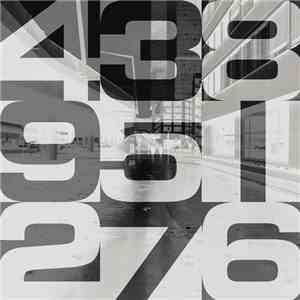
Singer: Sonar
Album title: A Flaw Of Nature
Label: Ronin Rhythm Records – RON 009
Type: CD, Album
Country: Switzerland
Date of released: 2012
Category: Jazz, Rock
Style: Math Rock, Art Rock, Modal
Rating: 4.1/5
Votes: 386
Format: MP3 MP4 AA MP1 WAV AC3 APE MOD FLAC
Album title: A Flaw Of Nature
Label: Ronin Rhythm Records – RON 009
Type: CD, Album
Country: Switzerland
Date of released: 2012
Category: Jazz, Rock
Style: Math Rock, Art Rock, Modal
Rating: 4.1/5
Votes: 386
Format: MP3 MP4 AA MP1 WAV AC3 APE MOD FLAC
Related tracks or albums: